The archive as
an act of love.
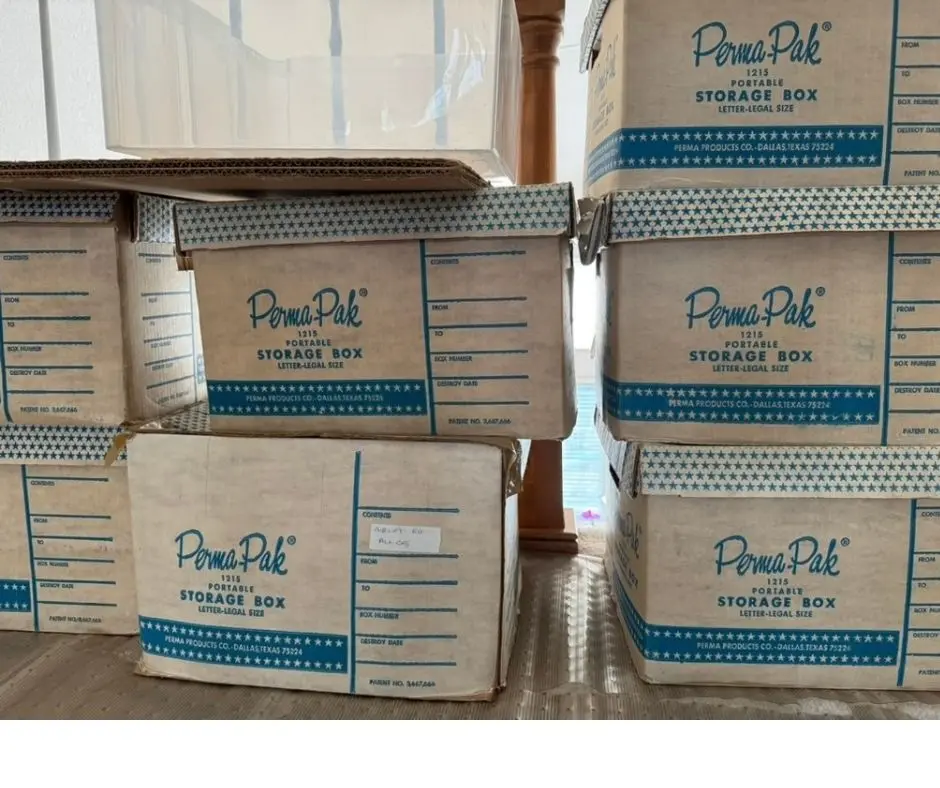
Love Ethic Archival Practice (LEAP™) is grounded in bell hooks's articulation of love as an action requiring care, commitment, knowledge, responsibility, respect, and trust. The four-stage arc, Finding, Receiving, Processing, Sharing, is Devaki Murch's original contribution, developed through direct work with the Operation Babylift Collection (OBC). Not borrowed. Not derived. Built through practice.
The grounding source for this whole project is education and knowledge, and how the past informs our future framework of thinking and engaging with one another and with the planet. Archives in Love and War is bigger than any one collection, any one methodology, any one person. It inhabits coexisting spaces and times in our minds and is demonstrated in our choices and actions. Empathy is the overarching goal: empathy for those before us, with us, and beyond us.
Finding. Receiving.
Processing. Sharing.
Mālama. Kuleana.
Pilina. Naʻau.
The language
the methodology required.
These terms are original intellectual contributions of Devaki Murch, developed through archival practice with the OBC. They did not exist in this form or with this meaning before being named in this work.
- enTRUSTED · The condition of receiving an archive not as assignment but as an act of trust. The capitalization is not stylistic. It is the meaning.
- Generational Samaritanism · Carrying something heavy from the past forward not for yourself, but for those who will need it after you are gone. Service across generations.
- Diplomacy of Care · Navigating contested, traumatized archival spaces using care as the primary instrument rather than authority or force.
- Human Time Window · The closing window of living memory. Repair now is relationship. Repair delayed is memorialization.
- Proof of Consequence · The condition of being living evidence of a historical event the official record declared concluded. What the experience is after a war.
- Fine Print of Belonging · The condition of belonging that exists on paper but was never explained to the person the paper was about.
- Kaleidoscope of Truth · The same fragments of evidence seen from different lives produce different patterns. All true, none complete alone.
- Consequence-Acknowledging Patriotism · The third position between nationalist celebration and progressive critique. Loving your country enough to hold what it has done.
- Relational Multiplicity · The design refusal to resolve competing truths into a single authorized narrative.
"When I use a word, it means just what I choose it to mean, neither more nor less."
Lewis Carroll, Through the Looking-Glass · Humpty Dumpty · The institutional logic LEAP was built to counterThe methodology
is the project.
LEAP governs every design decision in real time, file delivery protocol, gathering facilitation, consent architecture, the way a record is handed to the person it documents. The Invisible Threads Gathering (April 2026) was the first documented demonstration of LEAP applied simultaneously to archive stewardship, event design, community facilitation, and active enforcement conditions. Proof of Convergence. Proof of Consequence. See the full project →
A gathering belongs to
the people in it.
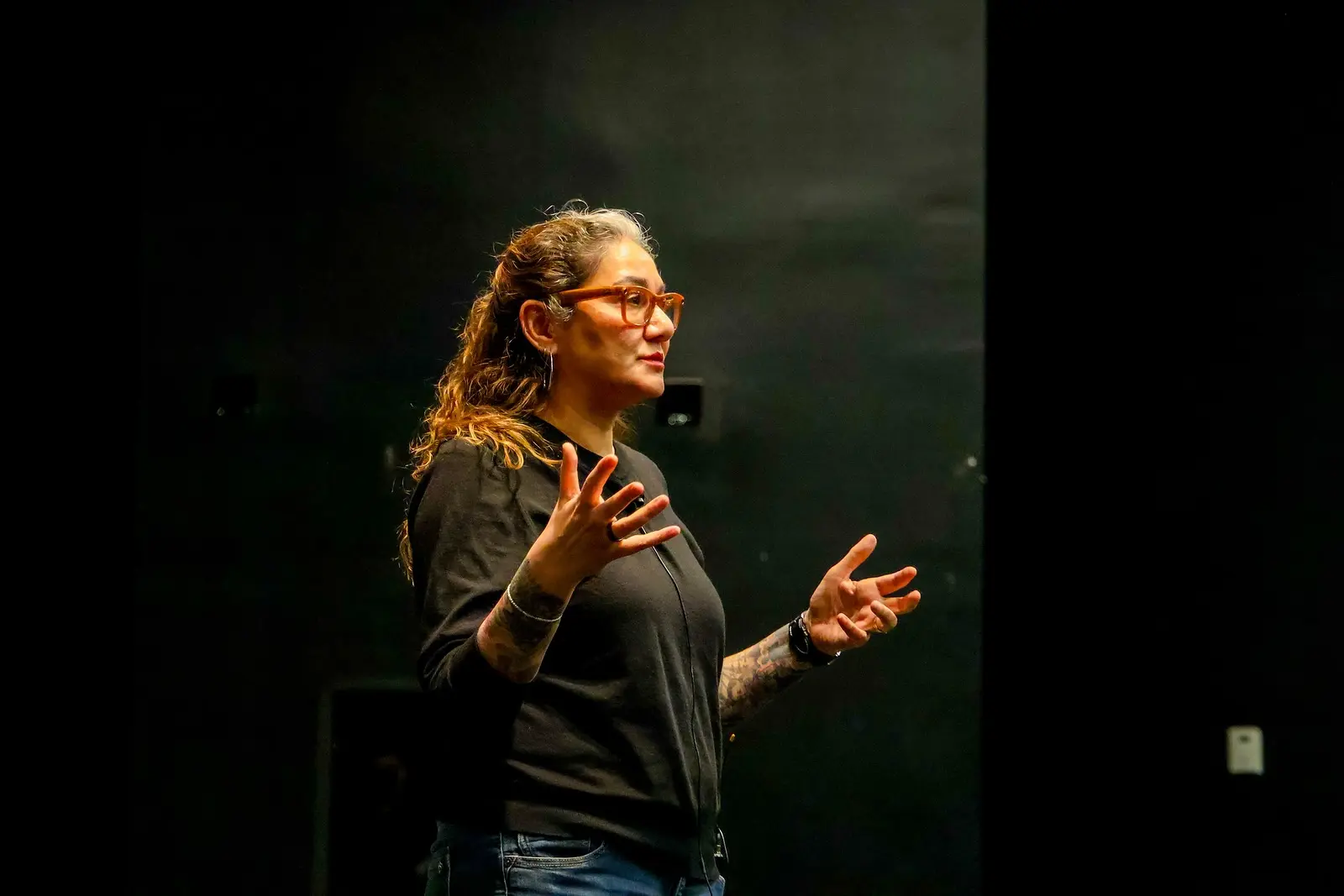
In April 2026 I convened the Invisible Threads Gathering in Boulder, Colorado. Operation Babylift adoptees, the caregivers and veterans who got us out, the diaspora that received us, and the communities that came after. Four days, four venues, hundreds of people, with original records on the walls and the people the records name in the room.
I built it under active ICE enforcement. I built it after the administration rescinded the Protected Areas policy at schools, hospitals, churches, and courthouses, the federal protections that used to mean a refugee or an undocumented family could attend a community event without risking detention. I built it knowing some of the people I was inviting would not come if their faces could end up in a federal facial recognition system. I built it for them anyway, with a policy that protected them, because that is what the love ethic requires when the regime is hostile.
The Operation Babylift adoptees are fifty years older than the children being separated from their families this week in cities across this country. ICE is making arrests in schools, churches, hospitals, and courthouses. Federal agents have killed people. Renee Good, an American citizen. Alex Pretti. Those are two of the names that made the news. There are many more names in many more communities that did not, and the pattern of which deaths get covered and which do not is its own form of violence. Status does not protect anyone right now. We are the same children. We were moved when our families could not protect us. The ones moving children now are the same kind of people who moved us. The love ethic is not abstract. It is what one generation owes the next when the people in power refuse to recognize them as human. That is what the Here and Now policy was for.
The four rules below governed Invisible Threads. They are written here so that any community convening vulnerable people, in any space where presence cannot be assumed safe by default, has them. Take them. Adapt them. Use them. The principle holds: a gathering belongs to the people in it. Records, faces, and trust do not have to circulate through public infrastructure to be real. A protocol that protects what happens in the room is not a constraint on the work. It is the work.
Six choices made
before the policy existed.
I almost did not run this gathering. After the administration rescinded the federal Protected Areas policy, I sat with the question of whether to cancel. I sat with the question of whether to shelve the entire project for the next five years. Both were real options. I am not going to pretend they were not.
What I decided was that I would not deny the people Operation Babylift created the chance to gather. We had waited fifty years. The threat was real. The answer was not to disappear. The answer was to take precautions and make changes that would decrease the risk to the people walking in the door. The decisions below are what that looked like in practice. The rules that follow are the codified result.
-
01
Venue change to protected public spaces.The original gallery plan moved to CU Boulder and the Boulder Public Library Main Branch, two larger public venues with established ICE protocols and security infrastructure. Boulder is a sanctuary city. That mattered. We chose venues that already had the institutional muscle to protect attendees if something happened. The protected status of those venues was the entire reason we chose them.
-
02
Hotels are unprotected. We treated them that way.CU Boulder and the Library are protected spaces. The hotels people slept in were not. I removed the room block links and the hotel information from any online presence I controlled. Some of that information was reposted by others, despite the request, and that is a lesson worth naming. You do not have full control over what stays scrubbed. When I sent travel guidance to confirmed attendees, I also reminded them to bring their passports. International-traveler awareness, applied to community members in their own country.
-
03
No full online RSVP list.Standard event practice is a registration database. We did not build one. The risk of subpoena was real, and a registration database is exactly the kind of thing that gets subpoenaed. Confirmed attendees received logistical details through private channels. The public-facing site never held a list of who was coming. The on-site guest list was a standard composition notebook, the kind a child uses for school, that could be closed and tucked into a bag at a moment's notice. Analog, portable, no metadata, no cloud sync, no remote access. If you cannot guarantee the data is safe, do not collect it digitally.
-
04
The gallery design was rebuilt in January.Two years of work on a design that highlighted individual adoptees was rebuilt in six weeks into a generic show using only pre-existing, publicly released media. There were no images of adult adoptees in the show. Facial recognition was the threat. The redesign removed the threat. A design choice that took two years to develop was let go in January because the conditions had changed and the people the design was for were now in danger.
-
05
Federal agents are not invited to this party.That is what I said from the stage at the opening of each night. It was not a joke and it was not for applause. It was a stated condition of the gathering, said out loud, witnessed, on the record. Some things are better when they are spoken than when they are only written.
-
06
I do not want to be the next headline.That was the operational principle behind every late-stage decision. Not for me. For the people walking through the door. A headline about this gathering would mean someone got hurt. We designed the gathering so the headline would not happen. Every other decision flowed from that one.
The Here and Now policy below is what those decisions became when written down as rules anyone could follow. The rules are short. The reasoning behind them is what every one of those decisions cost to learn.
Four rules.
One protected gathering.
The four rules above are a starting point, not a finished policy. Every gathering that adopts them will adapt them to its own community, its own venue, its own threat model. What does not adapt: the principle that a gathering is a closed circuit, not a broadcast.
This is also what we are leaving for the generations behind us. The teenagers who will be running gatherings ten years from now under conditions we cannot predict. They are inheriting whatever we build. The Here and Now policy is one piece of that inheritance. We made the tools. We documented the reasoning. We named what they were for. Use them, sharpen them, write better ones.
Five steps from request
to record in hand.
When a person at the gathering wants to look at a specific record, the protocol that governed Invisible Threads is portable. Any archivist working with sensitive materials in a community setting can adopt it. The five steps:
-
01
Speak to a team member.Anyone wearing a steward lanyard is a contact point. The first conversation is verbal, not written.
-
02
The request is logged privately.The inquirer's name and the record sought are recorded internally. This protects both the record and the requester. The log is not public, ever.
-
03
A steward reviews what can be shared.The lead archivist or steward determines what is available for this inquiry. Some records can be reviewed in the room. Some require follow-up. The decision is documented.
-
04
Printed summaries, not photographable originals.When a record is shared, the inquirer receives a printed summary prepared by the archive team. Originals stay with the archive. This protects the document and the inquirer.
-
05
Follow-up is confirmed before the inquirer leaves.If the inquiry cannot be resolved in the room, a follow-up pathway is established before departure. No one leaves without knowing what the next step is, and when it will happen.
The full April 2026 implementation, including venue-specific risk assessments and event-specific protocols, is held in private operational documentation. What is published here is the portable layer: the principles, the rules, the access protocol. Any archivist who needs more should write.
What I want the next generation to inherit, the Gen Z and Gen Alpha kids who will be running gatherings ten years from now under conditions we cannot predict, is not just the documents. It is the reasoning. Why analog, when we have phones. Why no posting, when posting is how everyone else builds an audience. Why the originals stay in the archive, when scanning would be easier. The reasoning is the love ethic in operational form. It is the answer to: what does it look like when we actually mean it. The four rules are a place to start. The work is yours from there.