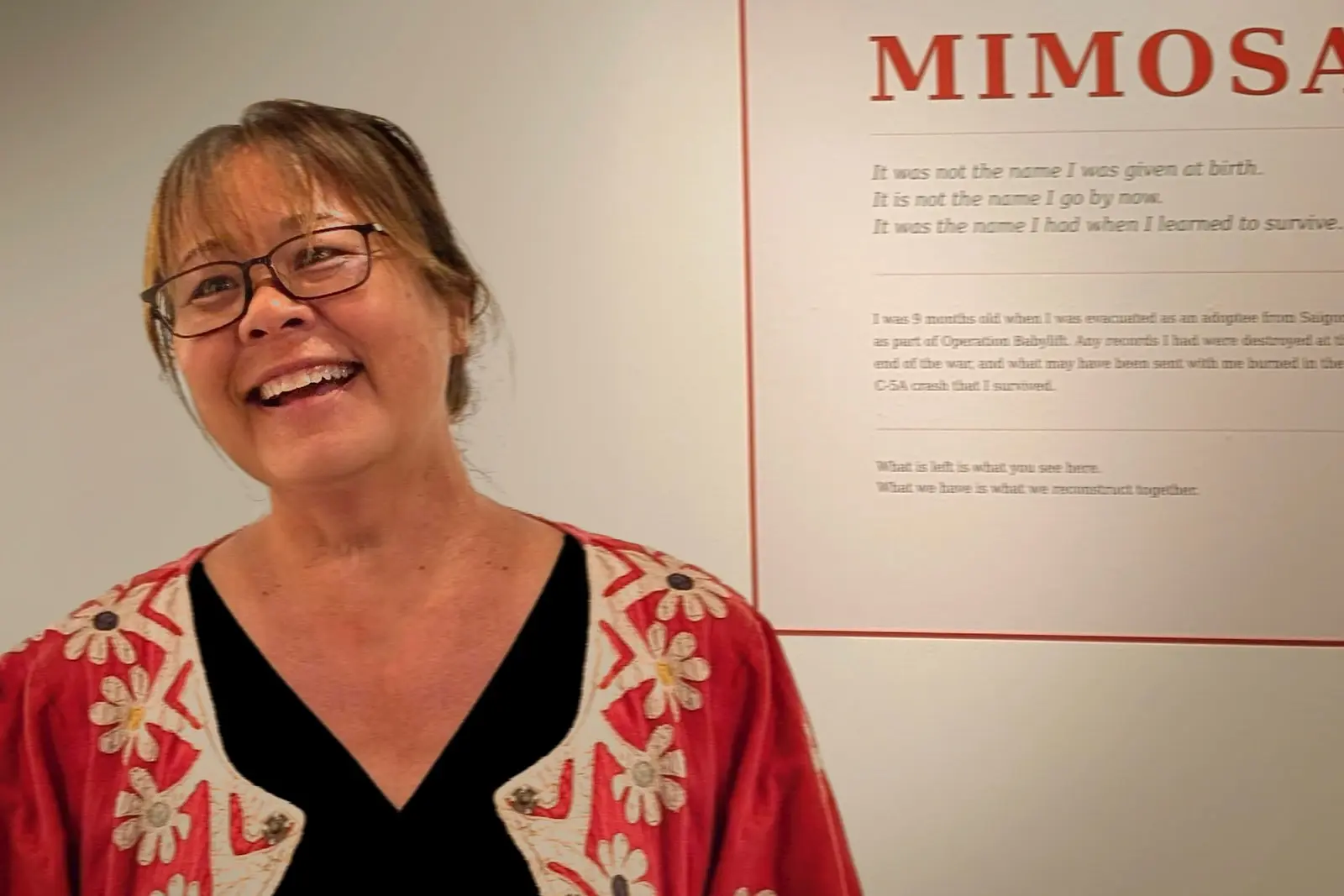
The agency did not find this name.
The agency created it.
This is one entry in the Operation Babylift Collection. A 2005 email between two FFAC caregivers, written thirty years after the fact, naming what the institutional record holds and what it cannot explain. It is not extraordinary. It is representative. The OBC contains hundreds of records like this, where a name appears, a substitution is noted, and an honest line acknowledges what the writer cannot recover. The methodology this archive uses is shaped by the kind of record this is. It assumes uncertainty. It assumes care. It assumes the person the record is about may someday want to read it.
Three names. One person.
Three lives in one body.
The archive is built around a central narrative architecture: three names, three possible lives, one body. What Is: the documented reality of who Devaki became. What If: the alternate realities the same history could have made. The StoryDeck holds the life you lived, reflected by the lives you almost did, and asks you to sit with both.
"What's the use of their having names, if they won't answer to them?" "No use to them," said Alice. "But it's useful to the people who name them, I suppose."
Lewis Carroll, Through the Looking-Glass · The question the archive was built to reverseThe love part of
Archives in Love and War.
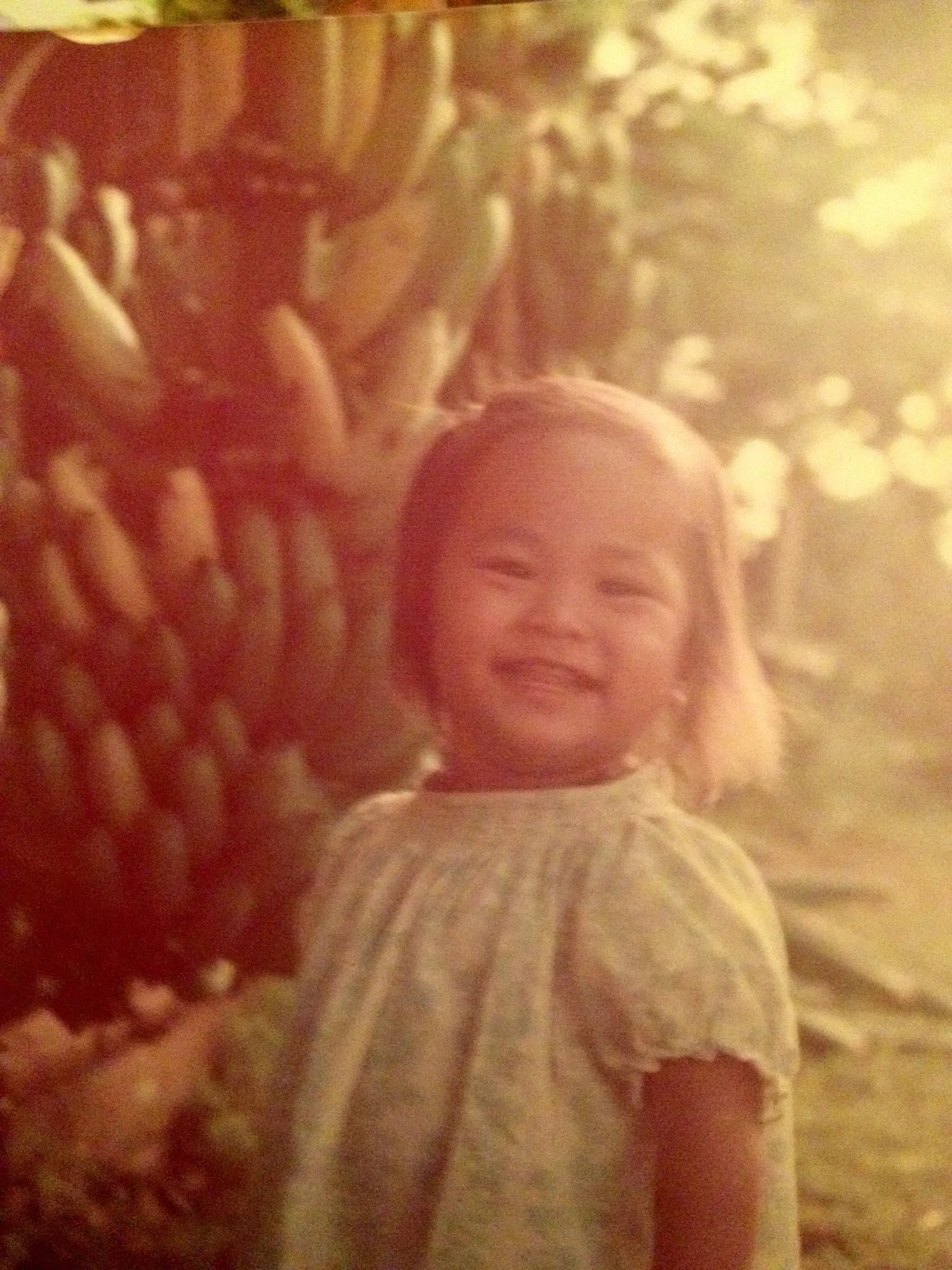
I am Devaki Murch. I am one of the children Operation Babylift evacuated. These records found me. The artifacts were given to me. The people reached out. None of that is incidental. The question I sat with, when Sister Mary Nelle handed me the boxes, was not why me. It was why not me. I was being asked to join a journey other adoptees were already on, to find our place in this world and clear a path for the ones coming behind us. The right answer to that question, the one the values I was raised with had already prepared me to give, is yes. So I said yes.
I grew up in Omao on Kauaʻi. I was raised inside a set of Hawaiian values that are the moral architecture of how I move in the world. Mālama, to care for. Kuleana, the privilege of being responsible for what you have been given. Pilina, the relationship that does not break across distance or time. Aloha ʻāina, love of the land that holds us. Naʻau, the deep knowing that exists before language can name it. I learned them long before I had words for them, the way anyone raised inside a value system does. They are not decoration. They are how I think. They became the methodology when I needed a methodology, because they were already there.
For more than twenty years I worked in events and tradeshows. Production, program development, community building, and most relevant to this archive, security and risk management for tens of thousands of people in convention centers, on event floors, in hotels and venues across the country. I have spent my entire career designing gatherings that are safe for the people inside them. I have written venue risk assessments. I have run incident response. I have sat with executive teams making the call about whether to proceed under threat conditions. That work was practice. It just did not know yet what it was practicing for.
For most of my career, I had two baseline goals for successful event production: no one dies, no one gets food poisoning. Now there is a third: no one gets deported. That is the line that names the difference between the work I used to do and the work I do now. The skills are the same. The threat model changed. The love ethic is what added the third clause.
I do this now, in 2026, with the urgency I do, because what is happening to immigrants and refugees in our communities right now is what happened to me in 1975. ICE is making arrests in schools, churches, hospitals, courthouses, and workplaces. Federal agents have killed people. Renee Good, a 37-year-old American citizen, in Minneapolis. Alex Pretti, days later. They are the names that made the news. There are many more names that did not, in many more communities, and the pattern of which deaths get covered and which do not is its own form of violence. American citizenship did not protect Renee Good. Status does not protect anyone, in this moment, from the people in power who have decided which families do not deserve to stay together. The Operation Babylift adoptees are fifty years older than the children being separated from their families this week, in our cities, on our streets. We are the same children. The connection does not break. Whatever I have learned about being one of those children, I owe to the next ones. That is the work. It is not separable from the methodology, the records, the gathering, or any other piece of this.
"I was not searching for an archive. I was searching for the archive I needed to exist. One that recognized my humanity, honored my complexity, supported my healing, and gave back as much as it received. That archive didn't exist. So I built it."
Devaki Murch · Founder, StoryScope StudioIn June 2024, Sister Mary Nelle Gage, the last surviving director of Friends For All Children, entrusted the records to me. Not to a university. Not to a government archive. To one of the children. Her directive was simple: connect as many adoptees as you can.
What I brought to that directive was a lifetime of values that had already prepared me to accept it, and twenty years of operational practice that had been waiting for a use that mattered this much. The methodology this site documents, Love Ethic Archival Practice, is what happens when those two things meet. The love is not abstract. It is operational. It is the security plan, the consent architecture, the venue risk assessment, the room temperature, the analog camera, the printed summary instead of the photographable original. The work is the love made visible. That is what care looks like when it has to design itself.
I am not only the steward of this archive. I am a primary subject of it. That is not a conflict of interest. It is the source of the methodology's integrity, and the reason I can be trusted with it.
The gallery where
the record became public.
East Window Gallery · 1525 Spruce Street, North Boulder · April 3 to 25, 2026. Eight walls of archival material anchored in the naming arc. Open daily with hands-on archive review. Concurrent with the Invisible Threads Gathering (April 9 to 12), the first time the full community that Operation Babylift created occupied the same room simultaneously with the archive, an active enforcement context, and a love-ethics methodology governing every design decision in real time.